browse_manuscript_page
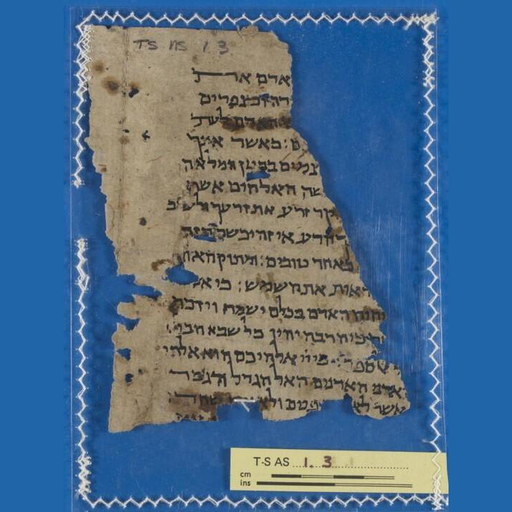
ChatGPTRead one manuscript page returned by a search: its text, where the text comes from, catalogue metadata, an image link, and how_to_cite. Read a page before quoting it or judging a match. Copy sys_id, p_num and volume_ie exactly from a result locator; never invent them. text_source says what the text is: pgp_transcription (a Princeton Geniza Project edition), snippet (part of the automatic transcription only; say so and infer nothing unseen), or none. An image link is not an inspection of the image. Cite with how_to_cite (en/he), which credits whoever made the text shown. Website link: https://genizahsearch.com/browse?sys_id=SID&page=P_NUM&volume_ie=IE.
find_chunk_parallels
ChatGPTFind manuscripts that share word chunks with a text, like the website's composition (chunk) search: the text is cut into overlapping runs of chunk_size words and every run is searched in the corpus. Use it when the user asks for chunk search (Hebrew: חיפוש מקטעים) or a chunk size for parallels; for spelling-tolerant passage matching use find_passage_parallels. Give one text of at most 5,000 characters; label and search longer input in sections and say what was covered. A smaller chunk_size finds shorter shared phrases and runs longer. mode: exact = the words as typed; variants = the 30 most frequent letter-confusion pairs, ONE change per word (the website's Basic level); fuzzy = near spellings. The Extended and Maximum levels are not offered for chunk search: they do not finish within the time limit. If the user asks for one, say so and offer variants. Starts a private background job like search_manuscripts and waits briefly: you get the first page or a job_id for get_research_job. One chunk search runs at a time for all users: on research_jobs_busy wait retry_after_seconds when given (otherwise finish your own running searches first), then try again. A search that stops early (its time limit, or a limit on spellings or candidates) returns what it found with the results_cut_off warning. Scores rank candidates by their matched chunks; they are not probabilities.
find_passage_parallels
ChatGPTFind manuscripts that share a passage, allowing spelling differences (letter-level passage matching). Give one text of at most 5,000 characters, OR up to three witnesses of ONE work (each with text or a returned raw_header, never both; omit text then). Label and search longer input in sections and say what was covered. Starts a private background job like search_manuscripts and waits briefly: you get the first page or a job_id for get_research_job. Scores count matching letters; they are not probabilities. sort only with witnesses (fused unless asked otherwise). For word-chunk matching with a chunk size (the website's composition search), use find_chunk_parallels.
get_capabilities
ChatGPTWhat this GenizahSearch deployment supports: search modes, passage parallels and multi-witness features, and limits. Call once at the start of research; a runtime error overrides what it advertises.
get_manuscript_details
ChatGPTCatalogue records, bibliography, or edition and translation credits for a returned sys_id, one source section at a time (FJMS catalogue, references or bibliography; NLI catalogue or MARC bibliography; PGP or FGP source credits, without text). Builds a ten-minute snapshot: page with next_offset and the SAME snapshot until next_offset is null; on details_expired restart the section; on details_pending retry after retry_after_seconds. Local records only: missing records do not prove absence. A bibliography entry is a lead, not proof that this passage was published.
get_research_job
ChatGPTPoll or page through one search started by search_manuscripts, find_passage_parallels or find_chunk_parallels. Copy job_id exactly; a pending state means the search is still running, not that it found nothing. Pages hold up to ten candidates: continue with the SAME job_id and pagination.next_page until it is null; never rerun the search. collection=filtered holds demoted candidates (e.g. duplicate photographs) with its own pages. job_not_found means the job expired or the server restarted, not an empty result.
list_manuscript_features
ChatGPTThe manuscript features filters.criteria accepts (the website's Manuscript features panel): script style and region, language and alphabet, vocalization, columns, lines, physical status, material, attributes, period of copy and measured sizes, each with its kind (list or range), sources and, for a list, its values with manuscript counts. Call it before filtering by a feature and copy values exactly; a list value of "_none" means nothing recorded. available=false: this deployment cannot filter by that feature.
search_manuscripts
ChatGPTSearch the Cairo Genizah corpus for a Hebrew or Judeo-Arabic word or phrase, or look up a shelfmark. Starts a private background search that has no lasting effect and expires ten minutes after it finishes, then waits briefly: you get the first page of results, or a job_id to pass to get_research_job. Never resubmit a pending search; a retry after a lost reply starts a second search. Start with exact; for a composition search two to four distinctive phrases separately, or find_chunk_parallels for a whole text. Search modes: exact = the words as typed, with no spelling variation. variants = also the common letter-confusion spellings (the 30 most frequent letter-confusion pairs, one change per word: the website's Basic level). variants_extended = 70 pairs, up to two changes per word (the Extended level): slow, and on common phrases it stops at the time limit with results_cut_off. The Maximum level is not offered. fuzzy = near spellings: every whole word within one edit of a query word of three or four letters, two edits from five letters, and only the word as typed for one or two letters (an edit adds, drops or changes a letter, or swaps two neighbours); prefixed forms included; slow, for damaged or uncertain readings. responsa = the Responsa-Project query syntax: word and word wildcards, #word for Hebrew prefixes and word# for suffixes, %word for plene/defective spelling, (a/b) alternatives, -word to exclude, word1 [3] word2 for up to three words between; responsa_options adds letter variants, Judeo-Arabic transliteration, flexible spacing and either word order. It is a query syntax, NOT a filter for responsa literature. title = words in the catalogue titles of the manuscripts (the library catalogue records and the NLI catalogue cache), not manuscript text; filtering by work is filters.works. shelfmark = a call number such as T-S 12.123 or ENA 1628.38. limit is how many candidates to save (default 100, fuzzy 500), not the page size.